



Financial abuse is about power and control
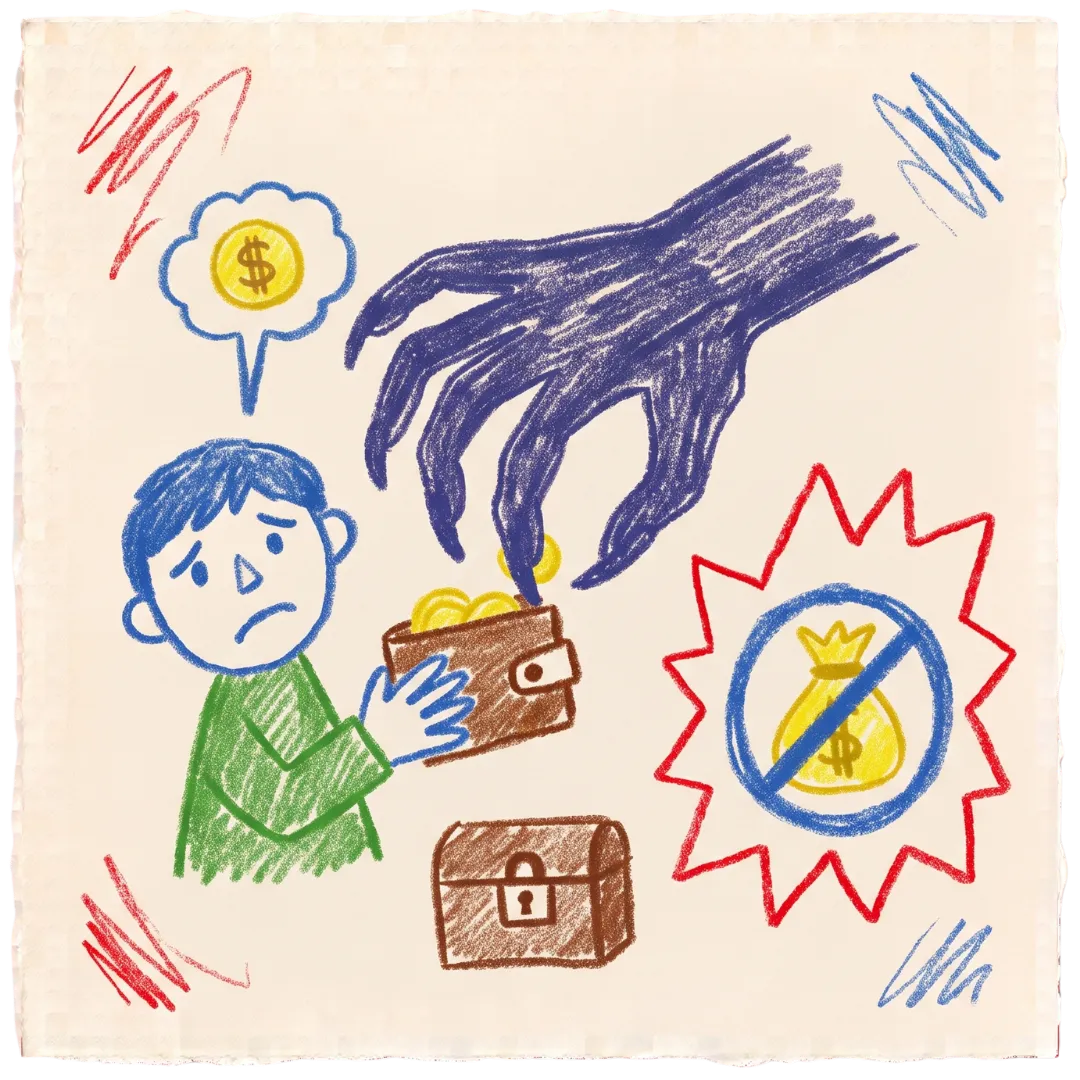
Economic or financial abuse occurs when an abusive partner controls money, damages financial stability, interferes with employment or education, creates debt, or prevents someone from accessing the resources they need to support themselves. It can happen alongside other forms of abuse or may be difficult to recognize on its own.
Money and credit
Economic abuse may include:
- Controlling access to bank accounts
- Taking a paycheck or other income
- Closely monitoring every purchase
- Withholding money for necessities
- Running up debt
- Damaging someone’s credit
- Forcing or forging signatures on financial documents
Employment and the workplace
A partner may interfere with someone’s ability to earn an income by:
- Making them late or causing them to miss work
- Preventing them from going to work
- Harassing or stalking them at work
- Interfering with job performance
- Damaging their reputation with an employer
- Pressuring them to leave a job
Education and job training
Economic control can also interfere with future earning potential.
Examples include:
- Preventing someone from attending school or training
- Harassing them at school
- Refusing childcare needed for classes
- Interfering with GED, ESOL, college, or vocational training
Housing
An abusive partner may make housing unstable by:
- Refusing to pay agreed household expenses
- Interfering with rent payments
- Creating rental debt
- Damaging a rental history
- Threatening eviction or homelessness
- Preventing someone from obtaining housing independently
Children, childcare, and support
Money connected to children can also be used as a form of control.
This may include:
- Refusing to contribute to childcare
- Withholding child-support payments
- Using financial support as leverage
- Interfering with childcare needed for work or school
- Threatening financial consequences involving the children
Legal issues and public resources
Someone may misuse legal or public systems to create financial pressure.
Examples can include:
- Filing unnecessary or retaliatory legal actions
- Prolonging legal proceedings
- Using court costs as a form of pressure
- Interfering with benefits or assistance
- Controlling documents needed to access resources
Economic abuse is not simply a disagreement about money. It is a pattern of using financial resources or opportunities to control another person.

Does any of this feel familiar?
- You cannot access your own money or bank accounts.
- Someone requires you to explain or justify every purchase.
- Your paycheck or benefits are taken from you.
- Credit cards, loans, or bills are opened in your name without your agreement.
- You are prevented from working or pressured to leave a job.
- Someone repeatedly interferes with your work schedule.
- You are prevented from attending school or job training.
- Childcare is withheld to keep you from working or studying.
- Someone intentionally damages your credit or rental history.
- You cannot access important financial or identification documents.
- Money for food, housing, medication, transportation, or other necessities is withheld.
- You feel financially unable to make choices about your own safety or future.

You can take one step at a time
Healing doesn’t happen all at once. We are here to support you at every stage, from immediate safety to long-term recovery.

Talk with an advocate
Ask questions, talk about what happened, and learn about the services available to you.


Understand your financial picture
When it is safe, begin identifying the accounts, income, expenses, debts, credit, documents, and resources connected to your finances.


Build skills for financial independence
Explore budgeting, savings, credit management, financial goals, employment preparation, and other skills that may help you build greater independence.


Explore employment and education
ACT may be able to connect participants with employment resources, GED or ESOL services, vocational training, and community partners.


Build skills for greater independence
ACT’s Economic Empowerment Program was developed to support survivors through financial education, employment assistance, advocacy, and connections to community resources.

Financial literacy

Program topics may include:
- Understanding financial abuse
- Setting financial goals
- Creating a budget
- Managing credit
- Understanding debt
- Building savings
- Planning for household expenses
Employment and education

ACT’s existing program describes support and referrals related to:
- Preliminary employment assistance
- Job readiness
- Vocational training
- GED resources
- ESOL resources
- Education and literacy
- Employment-related community services

Advocacy and resources

ACT works with community organizations to help connect participants with resources that may support long-term stability.
Support may include:
- Individual advocacy
- Community referrals
- Financial-resource referrals
- Employment connections
- Education resources
- Ongoing guidance and support
ACT’s older Economic Empowerment materials also reference microloans and matched-savings opportunities.

Frequently asked questions
Here are answers to some frequently asked questions about our services and your safety.


Protecting your financial future
Economic abuse can affect finances long after other immediate safety concerns have changed. You may want help reviewing your financial situation before deciding what actions make sense for you.
Talk with an advocate
Discuss your concerns and learn about financial, legal, employment, housing, or community resources that may be relevant.
Review your financial information
When it is safe, you may want to gather information about:
- Bank accounts
- Credit cards and loans
- Bills and debts
- Income and benefits
- Credit reports
- Housing expenses
- Tax records
- Important identification and financial documents
You do not need to complete everything at once.
Explore legal or credit-related help
If someone has forged your signature, opened accounts without permission, created coerced debt, interfered with benefits, or misused your identity, legal or financial professionals may be able to explain possible options.
An ACT advocate can help connect you with appropriate resources.
ACT’s older Economic Empowerment materials also reference microloans and matched-savings opportunities.